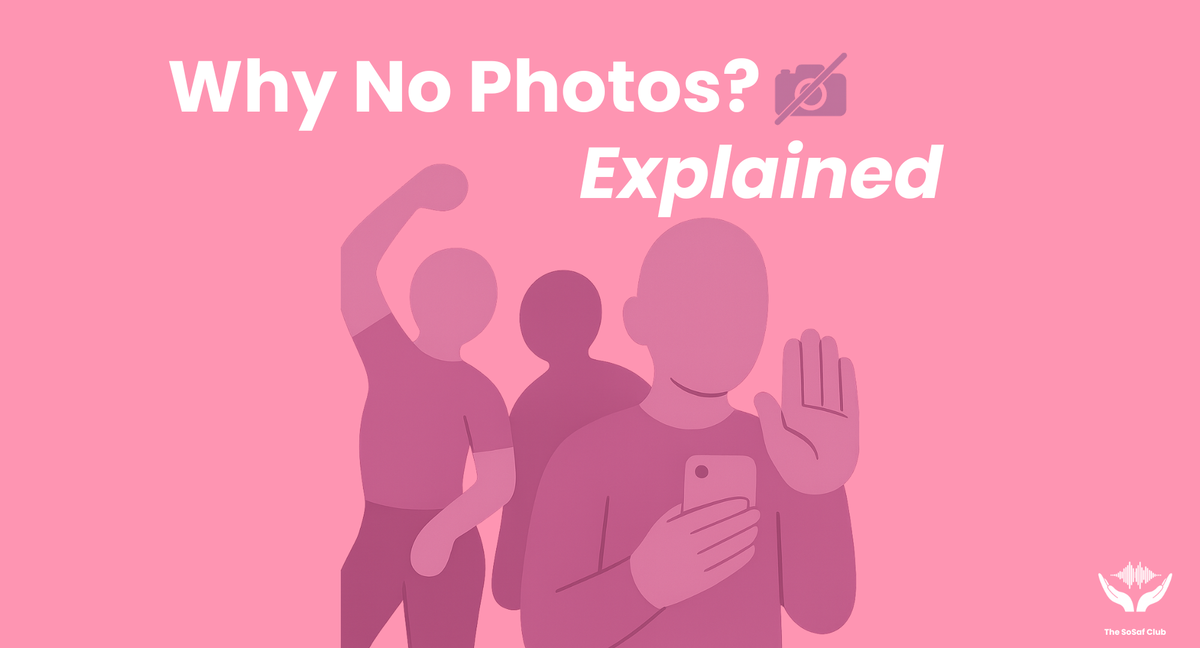
Why No Photos? Explained

Protect the vibe. Pocket the phone.
No-photo policies are becoming more common in clubs, raves, queer spaces, underground events, and festivals. For some visitors, they make immediate sense. For others, they can feel confusing or unnecessary at first.
The basic idea is simple: people should be able to dance, dress, connect, and exist in nightlife spaces without being filmed or photographed without consent. A no-photo policy helps protect privacy, reduce unwanted exposure, and keep the dancefloor focused on the experience instead of documentation.
This does not mean phones are evil, or that people are not allowed to remember their night. It means the dancefloor is treated as a shared space where other people’s privacy matters.
A no-photo policy asks guests not to take pictures or videos in certain areas of an event, usually on the dancefloor. Some venues apply it to the entire space. Others allow photos only in specific areas, such as the entrance, smoking area, toilet mirror, or a designated photobooth.
The policy is often supported with practical tools. For example, staff may place stickers over phone cameras at the door. There may be signs around the venue. Door hosts, awareness teams, or security may remind guests of the rule during the night.
The goal is not to hide what happens inside a club. The goal is to protect privacy, consent, and presence. If people know they are not being filmed, they are more likely to relax and participate freely.
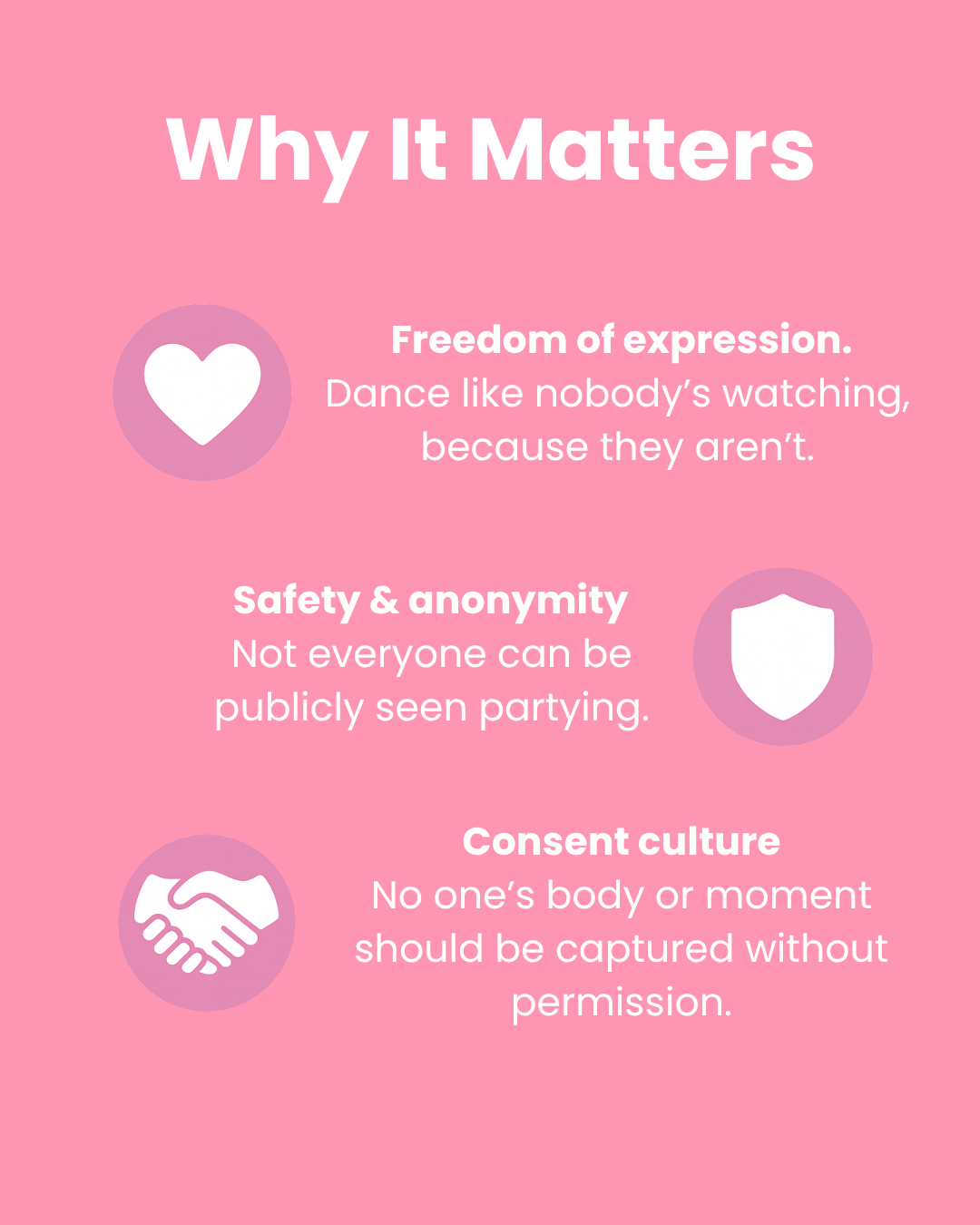
No-photo policies matter for three main reasons: expression, safety, and consent.
First, they support freedom of expression. Nightlife is one of the few places where people can step outside their daily roles. People may dance in ways they would not dance elsewhere, wear clothing they would not wear at work, or express gender, sexuality, or identity more openly. Cameras can make people self-conscious and change their behaviour.
Second, they protect safety and anonymity. Not everyone can be publicly seen at a party. Someone may not be out to family or colleagues. Someone may work in a field where nightlife content could be used against them. Someone may have safety concerns around being recognised. You cannot know this by looking at someone.
Third, no-photo policies support consent culture. Consent is not only about physical touch. It also applies to images. Being present in a public or semi-public space does not mean agreeing to be filmed, posted, tagged, or shared.
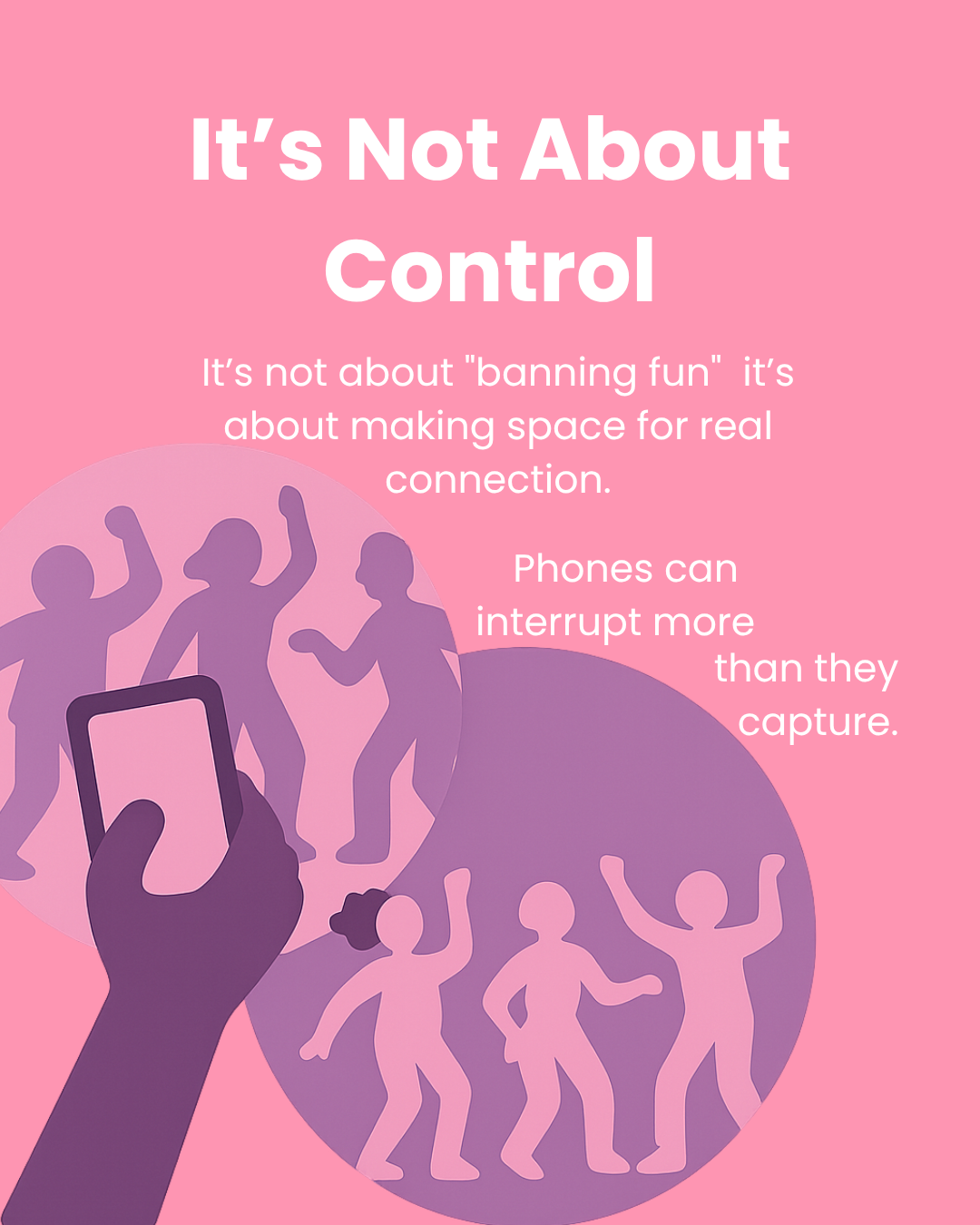
A no-photo policy is sometimes misunderstood as a strict or controlling rule. In practice, it is usually the opposite. It is a boundary that makes the space easier to enjoy.
Phones can interrupt a dancefloor. When someone lifts a phone to film, people around them may stop dancing naturally, move away, cover their face, or start performing for the camera. The energy changes. The focus shifts from being in the room to capturing the room.
This does not mean nobody should ever take photos in nightlife. It means organisers should be clear about where and when photos are appropriate. A dancefloor is often not the right place because people are close together, visibility is low, and consent is difficult to confirm.
A no-photo policy keeps the standard simple: if you want to capture something, do it in a place where that is allowed.
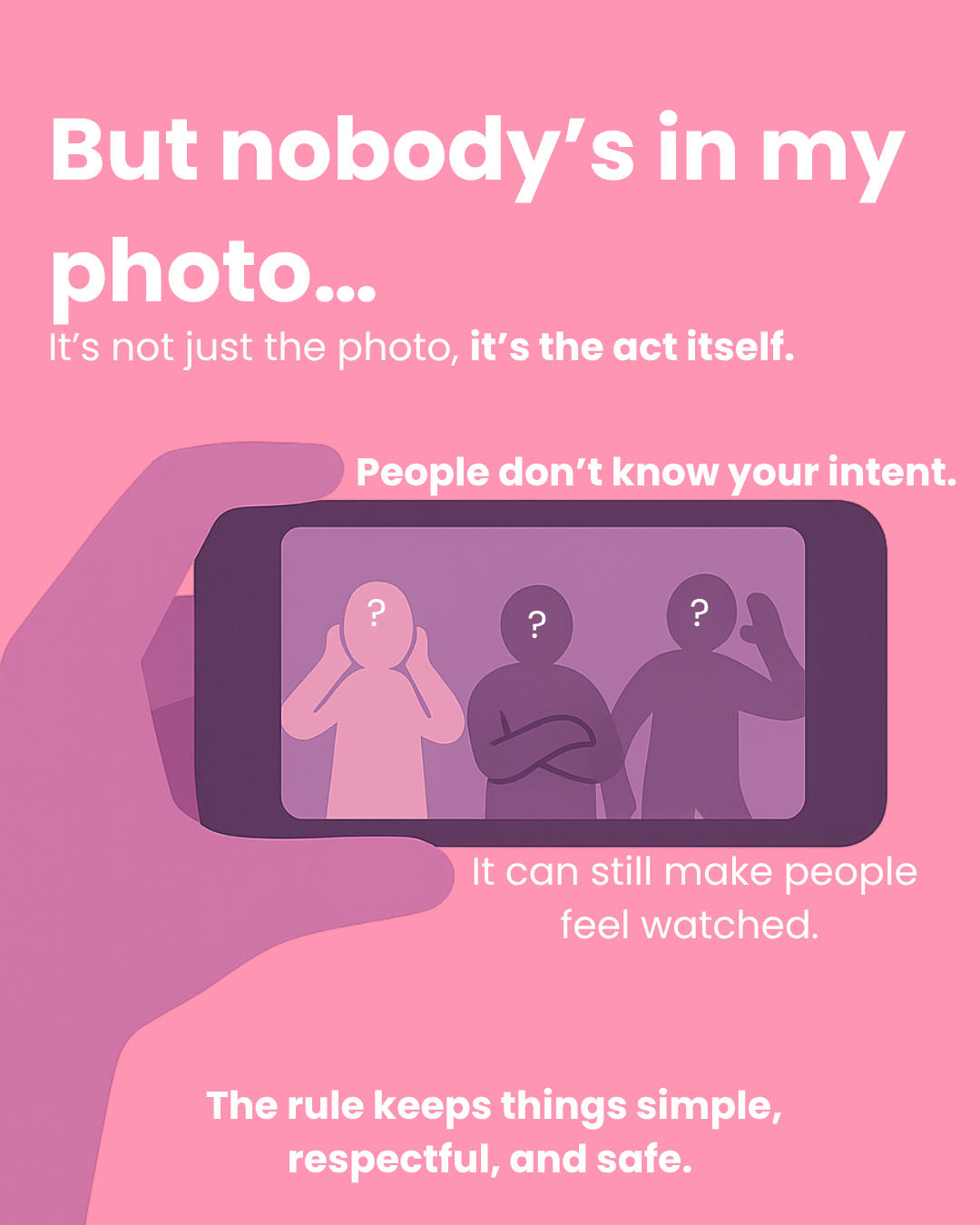
This is a common response. Someone may say they are only filming the lights, the DJ, their friends, or themselves. The problem is that other people cannot know that.
When a phone camera is pointed into a crowd, people nearby do not know whether they are visible. They do not know if the video is being saved, uploaded, live-streamed, or sent to someone else. Even if they are not clearly visible, the act of filming can still make people feel watched.
This is why no-photo policies focus on the behaviour, not only the final image. The issue is not always whether someone ends up in the photo. The issue is that filming changes the feeling of the space.
A clear rule avoids debate. No filming on the dancefloor means nobody has to guess, worry, or ask strangers to delete footage.
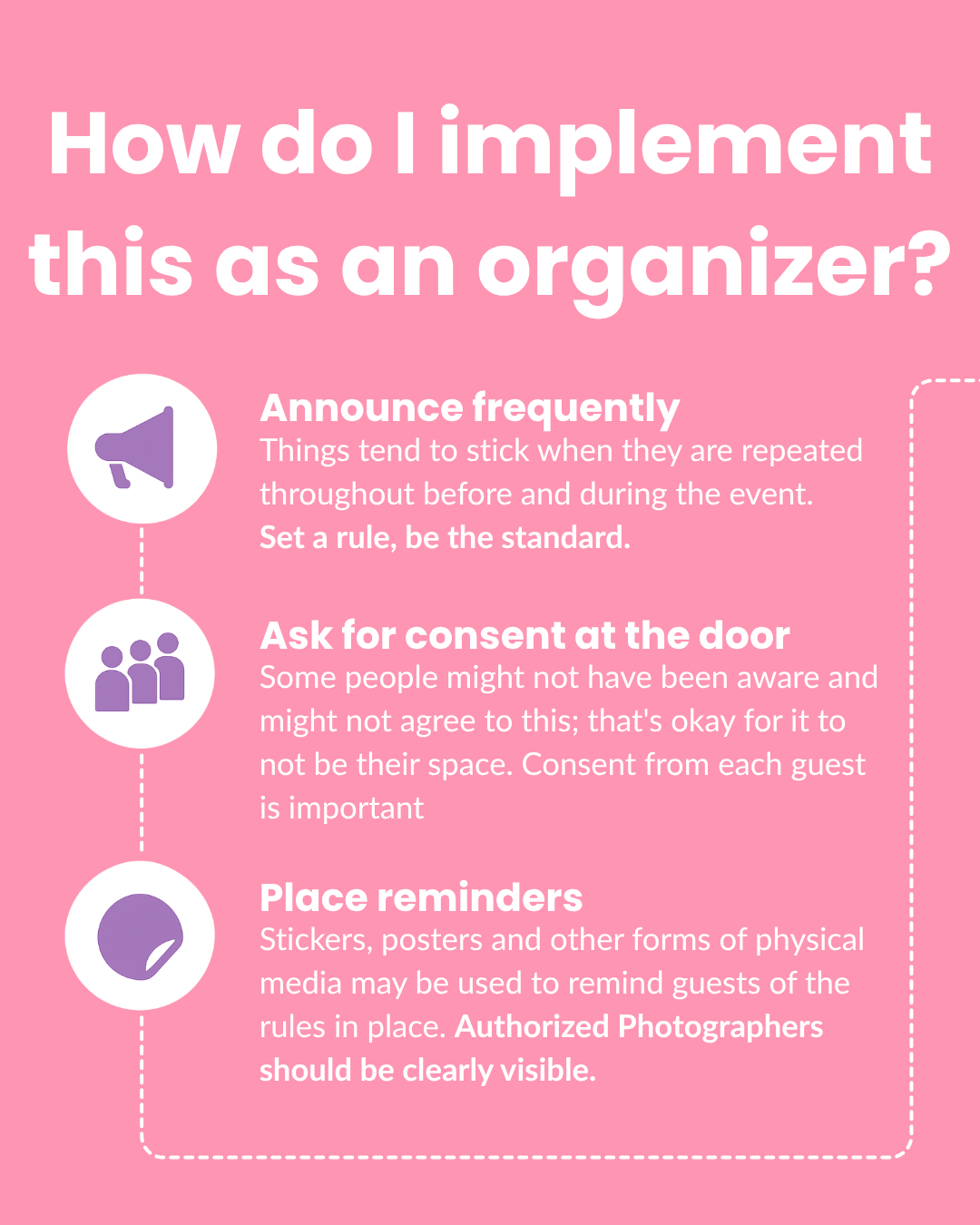
For organisers, a no-photo policy needs to be communicated before and during the event. It should not be a surprise at the door.
Mention the policy in the event description, ticket page, social media posts, house rules, and confirmation emails if possible. At the door, staff should explain it briefly and clearly. For example: “This is a no-photo event. We place stickers over phone cameras and ask you not to film or photograph inside the dancefloor area.”
Repetition helps. People are more likely to respect a rule when it is visible in multiple places. Posters, stickers, bathroom signs, bar signs, and reminders from staff all help normalise the policy.
If the event uses official photographers, make that clear. They should be identifiable, briefed on consent, and ideally avoid photographing people who have not agreed to be captured.
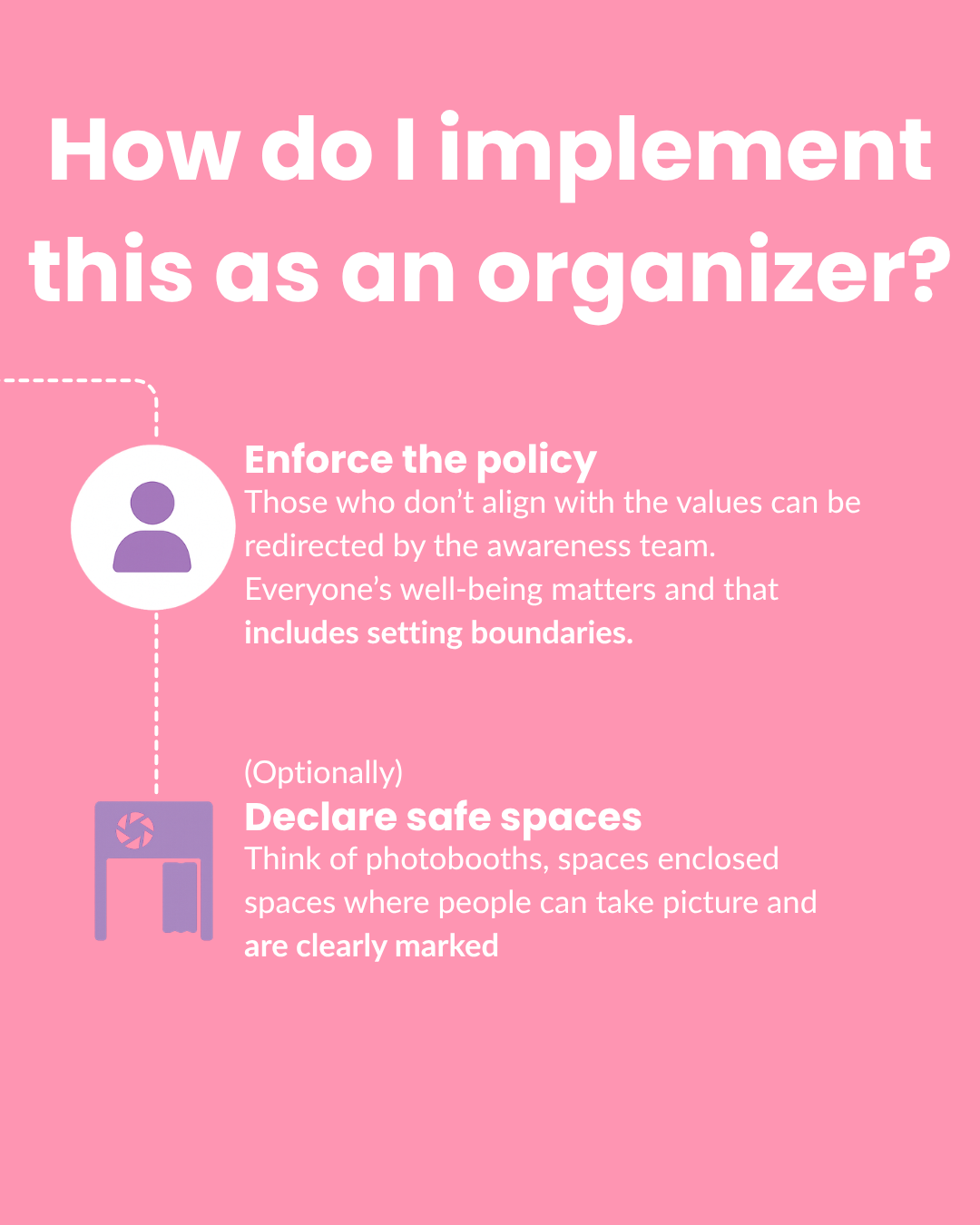
A no-photo policy only works if it is enforced consistently. If guests see others filming without consequences, the policy becomes unclear.
Enforcement does not need to be aggressive. Awareness teams, hosts, or staff can start with a simple reminder: “Hey, this is a no-photo space. Please put your phone away.” In many cases, that is enough.
If someone repeatedly ignores the rule, staff can escalate. This may mean asking them to delete footage, leave the dancefloor, or leave the event if necessary. Setting boundaries is part of protecting the space.
Organisers can also create designated photo areas. A photobooth, marked corner, or entrance backdrop gives people a place to take pictures without affecting the dancefloor. This makes the rule feel more balanced: photos are not banned everywhere, but they are kept out of the spaces where privacy matters most.
A no-photo policy is not about being secretive. It is about making nightlife safer and more comfortable for the people inside it.
When people know they are not being filmed, they can focus on the music, their friends, their body, and the room. They do not have to scan the crowd for cameras or worry about ending up online the next day.
For visitors, the takeaway is simple: respect the policy of the space you are in. If photos are not allowed, keep your phone away on the dancefloor. If you want a memory, use a designated photo area, take a picture outside, or simply let the night be something you experienced instead of something you captured.
For organisers, the takeaway is also simple: communicate the rule clearly, repeat it often, enforce it calmly, and give people clear alternatives where possible.
No-photo policies work best when they are not treated as punishment, but as part of the culture of the event.
Protect the vibe. Pocket the phone.
The SoSaf Club