For the newcomers: An Awareness-que ADE Survival Guide
Hoi all,
It’s me: your friendly awareness soul, roaming around ADE once again.
This will be my third year doing awareness work during ADE ; time really does fly. Every year I see similar questions, so here’s a little PSA for all the curious souls joining Amsterdam for this beautiful, chaotic, intense week.
This is not meant to scare anyone. ADE can be amazing. A little preparation just means more dancing, fewer stressful moments, and a safer night for you and your friends. 💛
Before stepping in the club
Whether it’s your first party or your fiftieth or your 50th year of ADE: good preparation can save you a lot of trouble and possibly a hangover
What should I bring?
Excellent question!
An empty reusable plastic bottle (if the venue allows it).
Policies vary by venue (ahem, raum), so always check beforehand. If you can bring one in, having a bottle with a cap can make staying hydrated much easier and means fewer open drinks to juggle on a crowded dancefloor.
Earplugs. Please.
Your ears deserve a long and happy life after ADE. Loop makes accessible non-custom options; for custom plugs, brands and providers such as ACS, Pluggerz, Alpine, and hearing specialists can help. Although customs ones take some time to make, you can find also cheaper universal ones available in most venues.
Nightlife worker with a porto/radio? There are custom earplug adapters for that too. Highly recommended as they are also much more comfy than the universal silicon tips.
A powerbank!
As much as we would unlimeted power. Sadly, we can't have that yet. That means your body eventually gets tired, and so does your phone consume its energy. A small powerbank will save you ALOT of trouble, seeking a potential power cable in a festival might cause you to lose your phone, or rather, have a dead phone and no way back home.
ID, payment method, and a way home.
Make sure you know how you’re getting back before the night gets blurry. Save your hotel address, check night transport options, and keep enough battery and money for the journey home. Also bring your ID! This might be asked at the door (a no is no after) but also makes sure that in case something bad happens, we can help out faster by knowing who you are!
What should I wear?
Oh boy. Imporant question! Not because what you might wear might not be 'sexy' or 'trendy' enough, but because what you wear can genuinely shape your entire night. My general advise:
Dress to undress
Wear enough layers to survive a cold, rainy 5 a.m. queue, then take layers off inside and put them in a locker. Jacket, sweater, overshirt. Whatever you have works.
Every year, we see people outside in tiny outfits, freezing and overwhelmed. Substances, exhaustion, lack of food, and rain can make feeling cold much more intense.
"What if they reject me because of the fit!!??!?!?"
Honey, nobody is rejecting you because you wore a coat to get there. At more outfit-focused or sex-positive events, door staff may ask whether you have an outfit planned. They understand it is cold outside (they are there for hours), and that you may be wearing your actual fire look underneath your layers.
And if you are queuing: remember that the weather can be rough, and waits can be long.
Who should I bring?
This is a slightly uncomfortable one, but it unfortunately it matters quite a bit.
Every year, awareness teams encounter people who have been left alone because they became overwhelmed, unwell, or “too much” for their friends to handle.
Please don’t be that friend.
Go out with people you trust! People who will value your wellbeing over getting back to the dancefloor. Make a small plan together:
- What happens if someone wants to leave?
- Where is your meeting point if you get separated?
- Who is checking in on whom?
- Can everyone get home safely on their own if needed?
Especially if someone is taking substances for the first time: do not leave them alone. It might not be fun for them, and they are the ones with least experience to handle such cases.
What should I take?
This is not a drug guide. But if you are considering taking anything: test before you take, research before you mix, and pause before you commit.
Reliable Dutch harm-reduction resources include Jellinek and Drugs Red Alert. Keep an eye on current warnings, test your substances where possible, and be extra cautious with unfamiliar pills or powders.
It is always okay to decide not to take something. It is always okay to stop. And it is always okay to ask for help. Drugs enhance the space you are in. If you are not in a good one before, it will becomes more intense after.
How do I get in?
A common question every ADE:
“The door host was rude and didn’t let me in for no reason!”
Sometimes door interactions can be unpleasant; but often, a venue with a door policy is trying to understand whether you’re there intentionally.
You may be asked:
- Who is playing tonight?
- Why did you choose this event?
- Have you been to this venue before?
- What are you hoping for tonight?
They are not necessarily testing your music trivia. They may be trying to understand whether you know the space and the community you are entering.
Going to a party is different from going to any party. Know the artists, understand the vibe, respect the venue’s rules, and don’t treat a community space like a tourist attraction. Intentionality goes a long way. If you are here reading this, its usually more than enough <3
After stepping in the club
You made it inside. Cute. Now what?
All is well
Amazing! Keep it that way:
- Drink water regularly. But don’t overdo it! You might feel thirsty but you don't have to drink every 2 minutes.
- Eat before you go out, and consider a snack during a long night.
- Take breaks.
- Get fresh air.
- Check in with your friends.
- Know where the exits, toilets, lockers, and awareness point are.
And please: do not jump off stages this year!!!!!!
All is not well
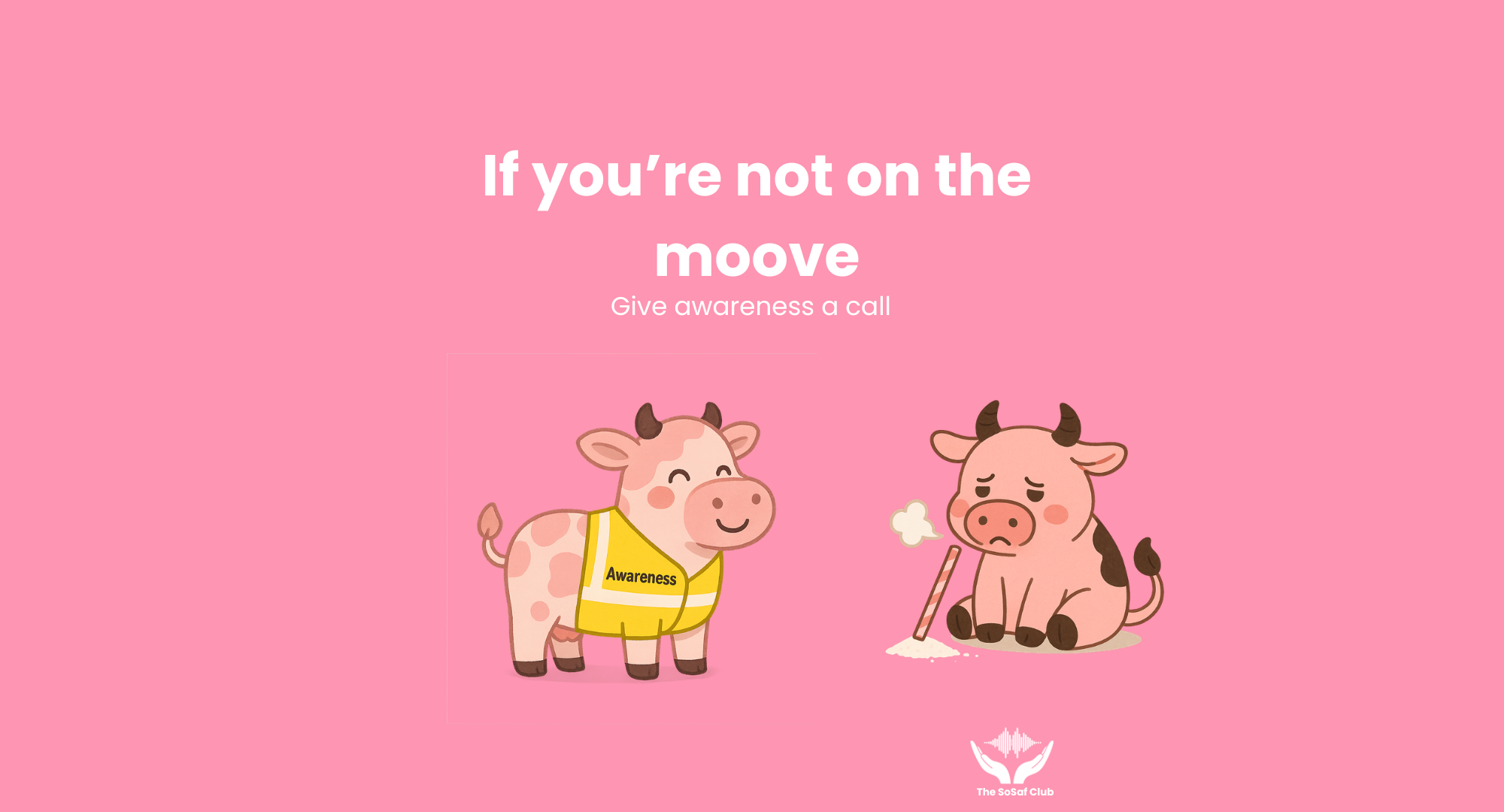
It happens to the best of us.
If you feel unsafe, confused, overwhelmed, unwell, too high, lost, or if something has happened: ask for awareness.
You can ask bar staff, security, a host, a door person, or an awareness team member directly. You do not need to have the perfect words. “I don’t feel okay” is enough.
The sooner you say something, the sooner someone can help.
“But it’s embarrassing.”
“I don’t want to move.”
“I don’t want to ruin the night.”
Your safety comes first. Always.
Awareness teams are not there to judge you, lecture you, or make you feel stupid. We are there to listen, help you regulate, find practical solutions, and remind you: hey, it’s okay. You’re not alone.
Take care of yourselves, take care of each other, and have a beautiful ADE. xx